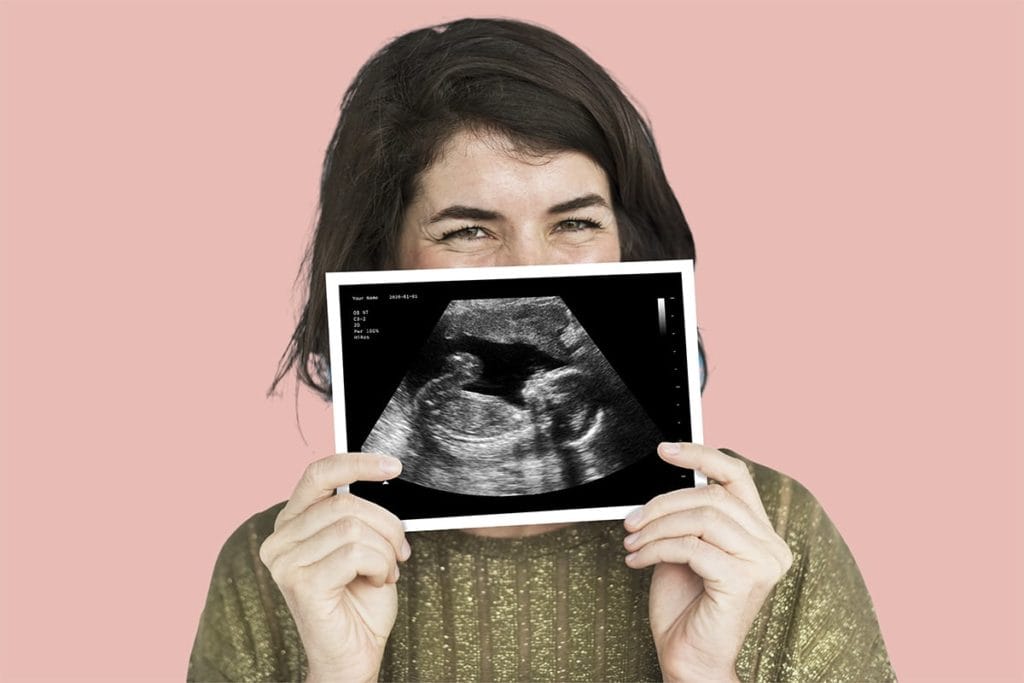
With the availability of free fake ultrasound generators and advanced AI tools, the ability to create and share realistic fake ultrasound images has become surprisingly easy. While often used in harmless pranks, gender reveal parties, and creative projects, the use of fake ultrasound images can venture into ethically murky waters when they affect personal relationships or are used for deceitful purposes.
This comprehensive guide explores the moral and ethical considerations surrounding fake ultrasounds, examining when such items might cross the line from harmless fun to potential harm, and providing a framework for responsible use.
Whether you’re considering a prank, working on a creative project, or simply curious about where the ethical boundaries lie, understanding the full picture matters. Fake ultrasounds exist in a space where humor meets deeply personal experiences around pregnancy and family, and their responsible use demands thoughtfulness and care.

Understanding Fake Ultrasounds and Their Uses
Fake ultrasounds are exactly what they sound like: images designed to look like genuine prenatal scans from a healthcare provider. Modern fake ultrasounds can be custom-made to include specific details like names, dates, and gestational information, making them highly convincing. Advancements in printing technology, particularly when using authentic thermal medical paper and professional-grade imaging equipment, have made it possible to create fake ultrasounds that are virtually indistinguishable from the real thing.
This realism is precisely what makes ethical consideration so important. The more authentic a fake ultrasound appears, the greater the responsibility on the user to ensure it’s employed appropriately.
Common Scenarios for Fake Ultrasounds
People use fake ultrasounds across a range of contexts, each carrying its own ethical weight. In entertainment and media, television shows, films, and online content creators regularly use fake ultrasounds to advance storylines involving pregnancy, adding dramatic twists or comedic relief. Prank shows employ them to evoke reactions from participants, while independent creators incorporate them into comedy sketches and social media content.
For personal pranks and jokes, fake ultrasounds offer a novel way to surprise friends or family with unexpected pregnancy news – typically followed by a quick reveal that it’s all in good fun. Some people use them for elaborate April Fools’ jokes or to add unexpected humor to parties and gatherings.
The Benefits of Fake Ultrasounds When Used Responsibly
Before examining the ethical concerns, it’s worth acknowledging that fake ultrasounds can serve legitimate, valuable purposes when employed thoughtfully.
In storytelling and creative expression, fake ultrasounds give directors, writers, and content creators the tools to develop complex narratives that engage audiences. Pregnancy-related plotlines can explore deep emotional themes – anticipation, fear, joy, family dynamics – that resonate with viewers who have experienced similar life events. For independent filmmakers and theater productions operating on limited budgets, high-quality fake ultrasounds provide an accessible way to add authenticity to their work without the complications of using actual medical imagery.
From an entertainment perspective, fake ultrasounds can create memorable moments when used appropriately. Among close friends who share a similar sense of humor, a well-executed prank can strengthen bonds through shared laughter. The surprise element, when handled with care and revealed quickly, creates the kind of stories that get retold at family gatherings for years.
There’s also legitimate value in educational and training contexts. Medical training programs, nursing schools, and healthcare education sometimes use simulated medical imagery (including fake ultrasounds) to help students learn without requiring actual patient materials.

Ethical Concerns and Risks
The ethics of using fake ultrasound images ultimately hinge on intent and consequences. Even well-meaning uses can cause harm if the user fails to consider the full impact of their actions.
The Problem of Deception and Trust
Deceiving someone with a fake ultrasound can severely impact trust, whether in a personal relationship or broader social interaction. The subject of pregnancy touches on some of the most significant aspects of human life such as family, future, commitment, responsibility. When someone discovers they’ve been deceived about something this meaningful, the emotional response often runs deeper than a typical prank might warrant. Even temporary deception can leave lasting impressions about a person’s willingness to mislead on important matters.
The practice of using fake ultrasounds to test a partner’s commitment or reaction deserves particular scrutiny. This approach treats a significant life event as a loyalty test, manipulating someone’s emotions to gauge their response. Such tests often reveal more about the tester’s insecurities than the tested partner’s character, and they can fundamentally damage trust regardless of the “result.”
Differing Reactions and Triggers
The emotional impact of a fake pregnancy announcement can be profound, and not everyone responds to surprise the same way. For individuals who have experienced miscarriages, stillbirths, fertility struggles, or infant loss, what seems like a harmless prank can reopen deep emotional wounds. A fake ultrasound might trigger grief, anxiety, or distress that the prankster never anticipated.
Even for those without such direct experiences, discovering that an ultrasound was faked can affect how they handle genuine pregnancy news in the future. It can introduce a moment of doubt or suspicion during what should be a purely joyful announcement.
Young or impressionable viewers of media content may not always distinguish between reality and fiction, potentially confusing their understanding of pregnancy. Creators who are using fake ultrasounds online have a responsibility to consider how their content might be interpreted by audiences across different ages and experiences.
Legal and Social Implications
In some rare cases, fake ultrasounds may be used to commit fraud such as soliciting money, gifts, or other benefits under false pretenses. At Baby Maybe, we strongly disclaim this type of use. Using a fake ultrasound in such a manner carries serious legal ramifications and contributes to a broader erosion of social trust. Using a fabricated medical document to manipulate someone’s decisions or obtain something of value crosses a clear ethical and legal line.

Clear Ethical Boundaries: What’s Never Acceptable
While many uses of fake ultrasounds occupy gray areas that require judgment, certain uses are simply never ethical.
Fraud and financial deception represent an absolute boundary. Using a fake ultrasound to solicit money, gifts, insurance benefits, legal accommodations, or any other form of material support under false pretenses is fraud. It’s illegal, harmful, and a fundamental violation of trust.
Presenting fake ultrasounds as genuine medical documentation crosses a line that should never be approached. Fake ultrasounds are novelty items and should never be represented as authentic medical records in any context where that distinction matters.
Using fake ultrasounds to manipulate serious life decisions such as pressuring someone into marriage, preventing a breakup, affecting custody arrangements, or coercing any significant commitment treats another person’s autonomy as secondary to the manipulator’s goals. This is unethical and harmful use.
Extended deception, where someone maintains a fake pregnancy story over days, weeks, or longer, compounds harm exponentially. What might have been a momentary prank becomes an elaborate lie that can devastate relationships and cause lasting emotional damage.
Guidelines for Responsible Use
If you’re considering using a fake ultrasound for a prank, creative project, or any other purpose, thoughtful preparation can help ensure the experience remains positive for everyone involved.
Know Your Audience
Before executing any prank involving a fake ultrasound, take time to genuinely understand your audience. Consider the backgrounds, personal experiences, and current situations of everyone who might be affected. Has anyone in the group experienced pregnancy loss or fertility challenges? Is anyone currently trying to conceive? Are there sensitivities you might not be aware of?
When in doubt, err on the side of caution. The momentary humor of a fake ultrasound prank is never worth the lasting pain it might cause someone dealing with difficult personal circumstances.
Context Matters
The setting in which you use a fake ultrasound significantly affects how it’s perceived and experienced. Private settings among close friends who share a similar sense of humor about such topics can be appropriate. Public settings, professional environments, or gatherings that include acquaintances or people you don’t know well are generally not.
Healthcare environments deserve special mention: never use fake ultrasounds in contexts where they might be mistaken for genuine medical documents or cause confusion about actual medical care.
Transparency and Quick Reveals
A great prank has a planned ending. Setting a clear, short window for the reveal (think minutes or hours, not days) helps ensure emotions don’t spiral or linger. Before starting, decide exactly when and how the disclosure will occur.
Have a brief debrief script ready: acknowledge any feelings that arose, share your intent, and offer a quick reset. If the recipient appears visibly distressed at any point, accelerate the reveal immediately. No joke is worth extended emotional distress.
For a public prank with multiple recipients, practical planning might include picking a reveal deadline (such as the end of a party or within 30 minutes), preparing a one-sentence explanation, and having a light pivot ready (like cake, a toast, or a new activity) to shift the mood after disclosure. Keep it light and your audience should understand that no harm was intended.

A Framework for Ethical Fake Ultrasound Use
When considering whether a particular use of a fake ultrasound is ethical, ask yourself these questions:
- What’s my intent? Are you aiming to create shared joy and laughter, or are you trying to manipulate someone’s emotions, test their loyalty, or gain something from them? Entertainment differs fundamentally from manipulation.
- Who might be affected, and how? Consider not just the immediate target but anyone who might witness or learn about the prank. Think about sensitivities, personal histories, and current circumstances that might make this harmful rather than fun.
- How quickly will I reveal the truth? If your plan doesn’t include a clear, prompt reveal, reconsider whether this is actually a prank or something more concerning.
- Could this cause real harm? Emotional harm is real harm. Damage to trust is real damage. Be honest with yourself about potential consequences.
- Am I respecting everyone’s autonomy? A good prank leaves everyone – including the target -laughing together afterward. If your plan requires someone to feel foolish, manipulated, or distressed, it’s not a good prank.
- Is this appropriate for the context? Professional settings, healthcare environments, and situations involving people you don’t know well are generally inappropriate for fake ultrasound pranks.
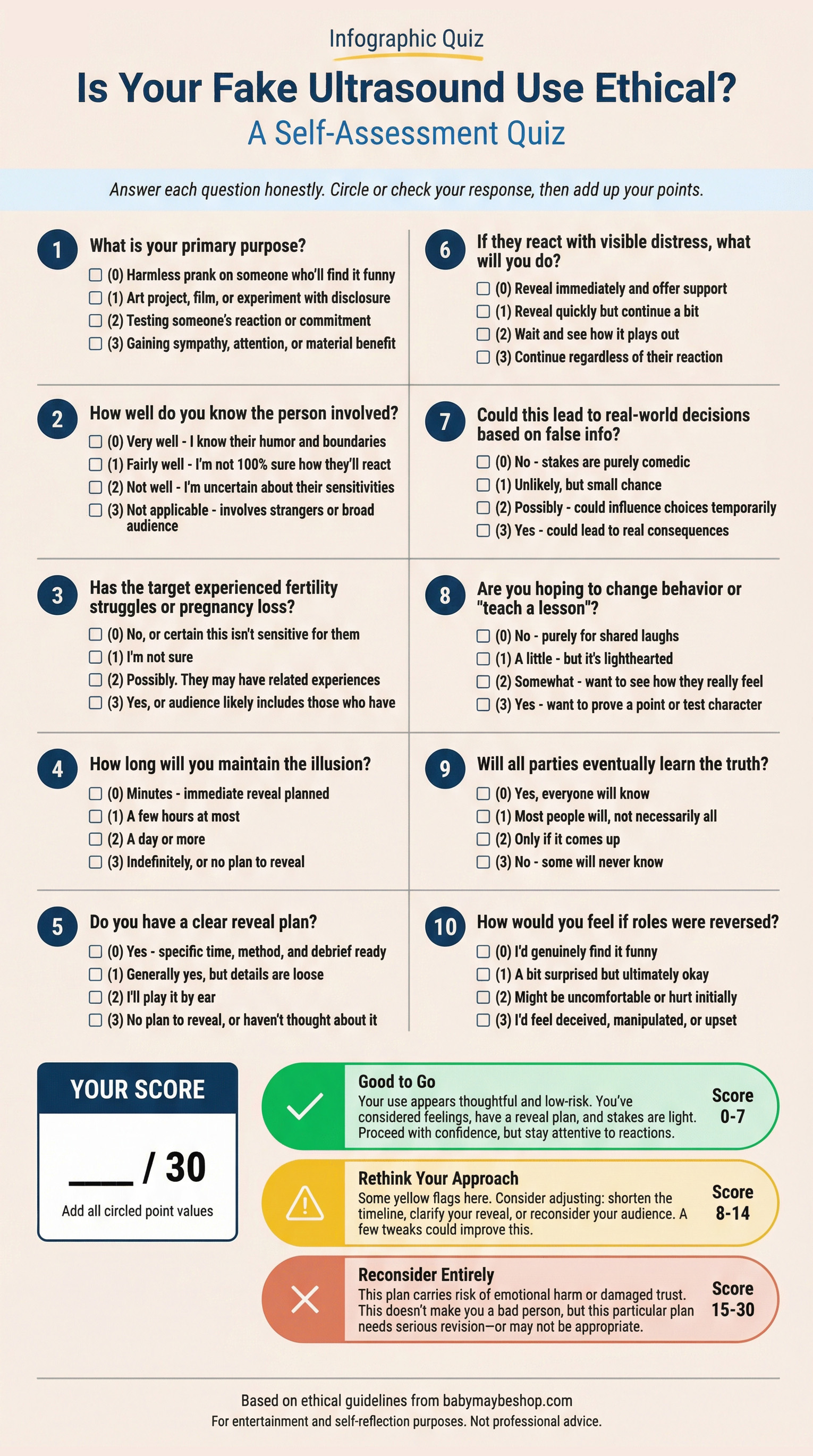
Make sure to carefully go over this simple quiz, and if you hesitate on any answer, take that as your cue to reconsider. The best pranks never require second-guessing.
Interactive Fake Ultrasound Ethics Quiz
Before using a fake ultrasound, it’s worth taking a moment to consider the potential impact. This quick quiz will help you honestly assess whether your planned use is harmless fun, needs some adjustments, or might cross ethical boundaries. Answer each question truthfully for maximum effectiveness.
This quiz is provided as a thoughtful guide to help you consider the ethical implications of using fake ultrasound products. Results are for informational purposes only and do not constitute professional advice.
Downloadable Quiz
Our Ethical Position at Baby Maybe
At Baby Maybe, we sell novelty items intended for entertainment, creative projects, and professional applications. We understand that our fake ultrasounds use studio-calibrated imaging, detailed formatting, and authentic thermal medical paper to deliver a look and feel that’s remarkably realistic.
Because our products are that convincing, we take responsibility for emphasizing ethical use. We believe fake ultrasounds can bring moments of joy and laughter when used thoughtfully. We respect the choices of our customers, and count on them to be responsible and prioritize the emotional wellbeing of everyone involved in their use case.
We decry using fake ultrasounds for fraud, deception for material gain, manipulation of relationships, or any purpose that causes genuine harm. Our products are clearly identified as novelty items, and we encourage all customers to use them with the golden rule in mind.
If you’re looking for ways to use fake ultrasounds that keep the fun without crossing ethical lines, explore our guide to creative and harmless uses. And if you’re curious about how to identify fake ultrasounds, that resource can help you understand what distinguishes novelty items from authentic medical imagery.
What to Do If Things Go Wrong
Even with the best intentions, a prank might land differently than expected. If someone becomes upset or distressed, respond immediately. Offer a sincere, unqualified apology – not “I’m sorry you felt that way” but own the transgression and offer something along the lines of “I’m sorry I caused you distress.” Acknowledge their feelings without defending your intentions. Give them space if they need it, and be prepared for the possibility that the relationship may need time to recover.
Learn from the experience. Consider what you might have missed in assessing the situation, and let that inform how you approach similar decisions in the future.
Finding the Right Balance
The ethics of fake ultrasounds ultimately come down to balancing creative expression and entertainment value against the potential for emotional harm. That balance tips toward acceptable use when the context is appropriate, the audience is carefully considered, the reveal is quick and clear, and everyone ends up laughing together.
It tips toward harm when deception is prolonged, when sensitive individuals are targeted without consideration, when the goal is manipulation rather than shared fun, or when someone stands to gain materially from the deception.
Fake ultrasounds occupy a unique space in novelty items – they reference one of life’s most significant experiences, which is precisely what makes them capable of generating strong reactions. That power deserves respect. Used thoughtfully, fake ultrasounds can create memorable moments of surprise and joy. Used carelessly, they can cause lasting harm.
The choice, as always, lies with the user. We hope this guide helps you make that choice wisely.
This information is presented as a general guide on the ethics of fake ultrasounds and is for informational purposes only. The material provided is not intended to be a substitute for advice or information from your physician or healthcare provider.